





Heavy Safes: Why Weight Is Important For High Security
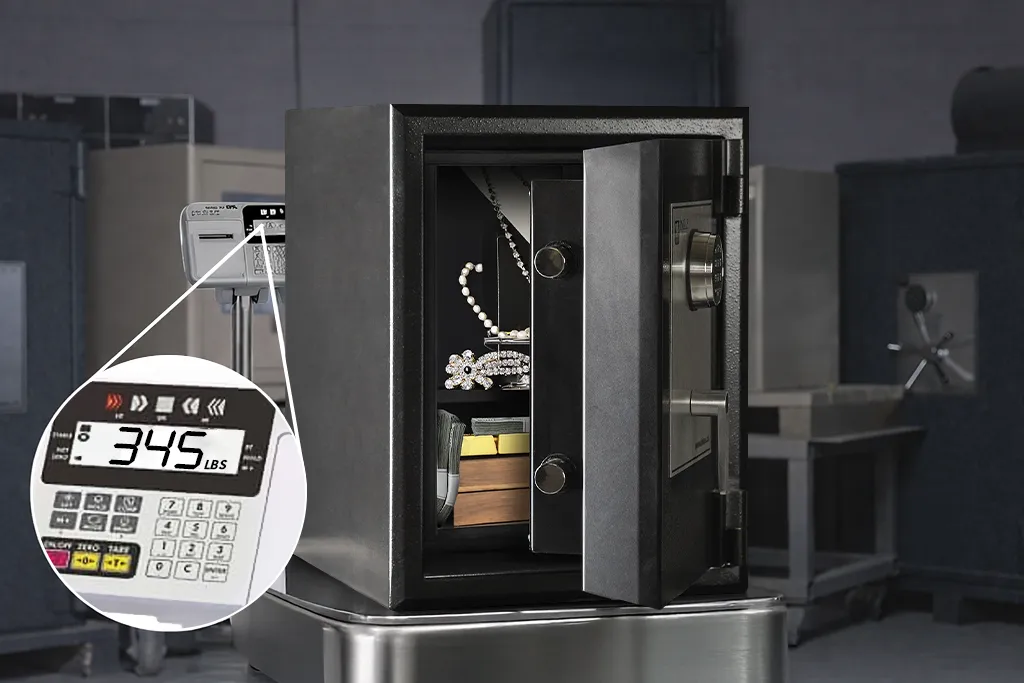
In recent years, people have been increasingly concerned about their homes being broken into and their valuables being stolen. This growing concern is reflected in the expansion of the global safes and vaults market, which was valued at $8.6 billion in 2023 and is projected to reach $18.7 billion by 2032, growing at a CAGR of 9% from 2024 to 2032 [source].
However, with so many different types of safes available on the market, it can be easy to feel overwhelmed by the range of options. This article helps explain the role that the weight of a safe plays in determining how secure it actually is when protecting irreplaceable possessions, valuables, and important documents. Weight remains one of the most practical indicators of real-world safe security.
Why Are Some Safes So Heavy?
First, let’s look at factors that play a part in how heavy a safe is, such as the composition, the steel wall thickness, the safe’s size, and its design.
Composition
The combination of metal and composite layers used in a safe plays one of the biggest roles in determining its weight. High-security safes often use multiple protective layers, which may include fire-resistant materials that shield valuables from heat and flames, as well as hardened or ballistic steel layers designed to resist heavy-duty power tools and other advanced attack methods.
The use of multiple layers forces burglars to carry different tools in order to break through each barrier, increasing both the difficulty and the time required to access the safe. Longer attack times significantly increase the risk of detection and interruption. The exact materials and layer combinations vary by manufacturer, but they directly affect the safe’s total weight. In general, the heavier the safe, the higher the level of protection it provides for valuable items.
Steel Wall Thickness
Steel wall thickness is measured using a system called gauge. Lower gauge numbers indicate thicker steel, while higher gauge numbers indicate thinner steel. Although this may sound counterintuitive, a lower gauge rating means stronger resistance to cutting, bending, and drilling.
For high-security applications, safes typically feature steel walls ranging from 12-gauge to 6-gauge. A 12-gauge steel wall measures approximately 2.057 mm (0.081″), while a 6-gauge wall measures about 4.166 mm (0.164″). Thicker steel adds considerable weight but also provides much stronger protection against forced entry.
Size Of Safe
Generally speaking, larger safes are heavier due to increased material use. As a rule of thumb, it is recommended to choose a safe that offers more internal space than is currently needed. Over time, most owners accumulate additional valuables, important documents, or personal items that require secure storage.
Larger and heavier safes also offer improved stability and are more difficult to tip or reposition during a break-in.
Design Features
Depending on the manufacturer, safes may include a range of built-in security features that increase both weight and protection. These features often include reinforced doors, hardened locking bolts, internal relocking mechanisms, and heavy-duty locking systems.
In high-security safes, additional materials such as cement-based fills, reinforced steel structures, and complex locking assemblies are commonly used. These features add weight while significantly improving resistance to tampering and forced entry.
The Benefits Of Heavy Weight Safes
One of the most obvious advantages of heavy safes is that they cannot be easily carried away during a burglary. Even if an intruder gains access to a property, the weight of the safe makes removal extremely difficult, reducing the risk of theft of valuables, documents, or firearms.
A high-security safe’s weight comes primarily from thick steel walls and multi-layer composite construction. These elements provide strong resistance to cutting and drilling attempts. Anyone trying to breach such a safe typically requires power tools, which generate noise and increase the likelihood of being detected. Heavier safes also tend to offer better protection against fire and extreme heat compared to lighter models.
While heavy safes are generally more secure due to their resistance to theft, cutting, and fire damage, weight alone is not the only factor that determines overall security. Lock type, certification level, security features, and manufacturing quality all play important roles. Purchasing a safe from a reputable manufacturer is always recommended to ensure reliable performance when it matters most.
Material innovations
Modern advancements in material science have allowed INKAS® Safes Manufacturing to develop products that provide high levels of security without relying solely on traditional steel-and-concrete designs. These innovations focus on improving protection while offering better usability and installation flexibility.
Advanced Composites for Security
INKAS® safes incorporate specially developed composite materials that combine the strength of steel with lightweight, high-density components. These composites are designed to resist both physical attacks and extreme conditions such as fire, ensuring superior security for valuable items. For example, the INKAS® Fireproof Safe Series offers exceptional fire resistance and burglary protection without the bulky weight of older designs.
Balancing Strength and Weight
By replacing heavy concrete infill with innovative material blends, INKAS® creates safes that are easier to transport and install while maintaining the same level of security as heavier models. These advancements are particularly beneficial for customers needing safes on upper floors or in areas with structural weight limitations.
Eco-Friendly and Durable
The use of modern materials not only reduces weight but also supports environmentally friendly manufacturing practices. By minimizing reliance on resource-intensive materials like steel and concrete, INKAS® contributes to sustainability without compromising product integrity.
Practical Benefits
With these innovations, INKAS® safes provide homeowners and businesses with high-level protection in a more adaptable and user-friendly format. Modern material design allows safes to be both strong and practical for a wide range of environments.
How Much Does A “Good” Heavy Safe Weigh
Firstly, a “good” safe is defined as a safe that will withstand its indicated level of security and protection, when it matters most. These types of safes typically range from 100 lbs (45 kg) to 240 lbs (110 kg), with the average being around 185 lbs (85 kg). Any safe that weighs less than that is considered a “safe box”, rather than a proper safe intended to protect valuables. These are the ones that you’ll normally find in a big box store, intended for low security needs in homes and offices, and typically only weigh between 15 lbs (7 kg) and 45 lbs (20 kg). These safes don’t offer much protection at all, and can easily be picked up and carried away. You can use them if you’re not really putting anything valuable in them, or if you’re just hiding stuff in a secure place.
Good safes that are designed to be placed in a home or office to offer high security, can weigh up to 600 lbs (280kgs). So, if you need to store valuable assets such as irreplaceable jewelry, important documents, or luxury goods, then it is highly recommended that you consider a safe in this weight range to properly secure your assets. These heavy weight safes offer the highest level of protection against burglary, and are typically strong enough to survive walls collapsing on them in the event of a fire.
Commercial safes are a whole different thing. Their weight can range from 770 lbs (350 kgs), to whatever the buyer needs for maximum protection. While these safes offer a far higher security level than the typical homeowner or business needs, there are businesses such as diamond stores, financial institutions, and other high-value industries and collectors that require this extreme level of protection.
As a general rule, you should keep in mind that a good home or office safe, should be too heavy for one person to carry it alone. A good minimum weight for a secure safe should be no less than 150 lbs (70 kg). Regardless of the weight of safe you choose, it is always recommended to bolt it down, as we’ll discuss below.
Why Should You Bolt Down Your Safe – If It’s Heavy?
Many people assume that bolting down a heavy safe is unnecessary, but this is not the case. Anchoring a safe prevents tipping and makes removal virtually impossible without specialized equipment.
Bolted safes may also qualify for better insurance terms, including lower premiums and higher coverage limits.
If you are unsure about placement, anchoring methods, or potential property damage, a high-security safe manufacturer such as INKAS® Safes can recommend reputable local contractors across North America to assist with professional installation.
Choosing A Heavy Safe That’s Right For You
Heavy safes offer significantly better protection than lightweight models found in big-box stores. They provide stronger resistance to burglary, fire, and certain natural disasters. Choosing the right safe involves considering wall thickness, composite layers, size, locking systems, and placement within the building.
Ultimately, the choice depends on the value of the items being stored, available space, and specific security concerns. However, opting for a heavier safe is generally recommended due to the higher level of protection it provides.
If you’re considering buying a safe, it’s best to consult a safes expert that can provide you with the options that meet your specific security needs and budget.